
Play Tower Rush Now!
Home → Mobile
Tower Rush Mobile
Tower Rush on mobile
The Galaxsys title Tower Rush, released in 2024, operates as a crash game rather than a traditional slot machine. This structural difference ensures that the interface adapts fluidly to vertical smartphone screens without requiring horizontal scrolling or complex navigation menus for players accessing the platform via standard web browsers.
Gameplay involves stacking virtual floors where each successful step increases the cumulative multiplier up to a maximum of x100. Players must cash out before the tower collapses, which creates a unique risk-reward dynamic distinct from games like Aviator by Spribe that features a 97.00% RTP and a max win cap of x1,000,000.
The theoretical return to player stands at 97.00%, representing a house edge of exactly 3.00% over long-term play. While some operators may configure alternative RTP settings ranging from 96.2% to 97.6%, the core mechanic remains consistent across all devices, ensuring fair odds verification through provably fair hash technology.
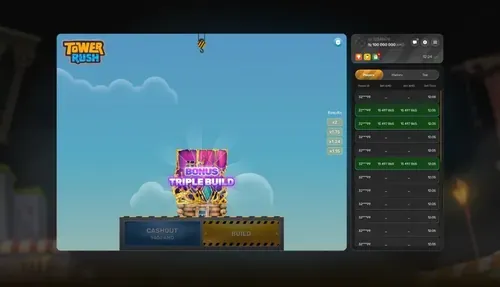
Playing in the mobile browser
Accessing Tower Rush directly through a mobile browser eliminates the need for separate application downloads, allowing immediate gameplay upon visiting the casino site. This instant access model mirrors the convenience found in other crash titles such as Chicken Road by InOut Games, which offers an impressive maximum win potential of x3,608,855.
The game utilizes HTML5 technology to ensure compatibility with both iOS and Android operating systems without performance degradation. Unlike Rabbit Road, also by InOut Games, which carries a 95.50% RTP and medium volatility, Tower Rush maintains its specific mathematical profile regardless of the device used for connection.
Users can engage with the bonus floor types, including Frozen, Temple, and Triple Build variations, seamlessly within the browser environment. These special mechanics add strategic depth to the rising multiplier phase, differentiating the experience from simpler instant games while maintaining the high-speed action characteristic of the genre.
Screen layout on phones
The vertical display optimizes the tower-building visualization, placing the rising multiplier prominently in the center for clear visibility during critical moments. This layout prioritizes the cash-out button placement, ensuring that players can react quickly when deciding whether to secure their winnings before the inevitable collapse occurs.
Information panels displaying the current bet amount and potential payout are positioned below the main game area to prevent accidental touches. The interface design draws inspiration from successful predecessors like Fish Road by InOut Games, which boasts a 96.00% RTP and a massive x2,542,251.93 maximum win capability.
Touch targets are enlarged to accommodate finger inputs on smaller screens, reducing the likelihood of erroneous commands during high-stakes rounds. The visual clarity of the multipliers helps players track their progress toward the x100 ceiling, providing essential feedback without cluttering the limited screen real estate available on mobile devices.
Touch controls and buttons
The primary interaction involves tapping the cash-out button to lock in profits before the tower falls, a mechanic central to the crash genre. This simple yet tense control scheme contrasts sharply with the reel-spinning actions found in traditional slots, focusing entirely on timing and risk management rather than symbol alignment.
Auto cashout features allow players to set predefined multipliers, automatically securing wins once the target is reached without manual intervention. This functionality enhances strategy by removing emotional decision-making, similar to how advanced tools might be utilized in high-volatility games like Chicken Road 2 by InOut Games, which shares the same x3,608,855 max win limit.
Button responsiveness is critical, as delays could result in missed opportunities to exit before the game ends abruptly. The tactile feedback provided by the mobile interface ensures that every tap registers correctly, maintaining the integrity of the provably fair system established by Galaxsys for this 2024 release.
Performance on older devices
Galaxsys designed Tower Rush to run efficiently on older hardware, preventing lag or freezing during the rapid multiplier ascent phases. This optimization ensures that players using legacy smartphones can still enjoy the full suite of bonus floors, including the challenging Triple Build option, without technical interruptions affecting their betting outcomes.
Memory usage remains low compared to graphically intensive slot games, allowing smooth operation even on devices with limited RAM resources. This efficiency mirrors the lightweight nature of other popular crash games such as those developed by InOut Games, ensuring broad accessibility across diverse user bases worldwide.
Tower Rush: key facts
| Parameter | Value |
|---|---|
| Game | Tower Rush |
| Studio | Galaxsys |
| Released | 2024 |
| RTP | 97.00% |
| House edge | 3.00% |
| Max win | 100x |
Data use during play
The Galaxsys engine for Tower Rush relies on continuous data transmission to update the rising multiplier in real time. This constant stream of information ensures that the 97.00% RTP remains accurate across all rounds without any lag or delay in the visual feedback. Players must maintain a stable internet connection to avoid disconnections that could prevent manual cashouts before the tower collapses. Mobile users should monitor their data usage carefully, as the high-frequency updates consume significant bandwidth during extended sessions.
The theoretical return of 97.00% for Tower Rush implies a house edge of 3.00% over a very long run of gameplay. This statistical baseline assumes perfect network stability and does not account for potential packet loss during critical moments near the maximum x100 multiplier. Other titles like Dice from Spribe also require robust connections to handle their adjustable volatility settings effectively. Users operating on metered mobile plans should consider limiting session lengths to conserve data while attempting to reach higher multipliers.
The crash mechanic in Tower Rush demands immediate server responses to validate each floor build and subsequent multiplier increase. If the network latency exceeds acceptable thresholds, the system may fail to register a timely cashout request before the random collapse event occurs. This risk is particularly relevant when comparing Tower Rush with slower-paced games like Plinko, which have different technical requirements. Players using public Wi-Fi networks often experience higher jitter rates that can negatively impact their ability to secure wins at the 100x cap.
Playing on unstable connections
A stable internet connection is critical for successfully cashing out before the Tower Rush game ends its current round. The Galaxsys provider utilizes a provably fair algorithm that requires precise timing to verify hash results and payout eligibility. Network drops during a rising multiplier phase can result in missed opportunities to lock in profits before the inevitable collapse. Players on unreliable networks should exercise extreme caution when targeting high multipliers close to the maximum x100 limit.
The 97.00% RTP of Tower Rush is calculated based on millions of rounds played under ideal conditions with zero connectivity issues. Unstable connections introduce variance that falls outside this theoretical model, potentially leading to lost bets due to timeout errors. In contrast, games like Mines offer similar 97.00% returns but may be less sensitive to momentary network fluctuations during gameplay. Users experiencing frequent disconnects should switch to wired connections or move closer to their router to minimize packet loss.
Auto cashout features provide a safeguard against connectivity failures by executing trades automatically when specific multiplier thresholds are reached. This function operates independently of manual input delays, ensuring that funds are secured even if the interface becomes unresponsive. The maximum win cap of 100x in Tower Rush means that missing a single cashout point can significantly reduce overall session profitability. Comparing this to Chicken Dash from TaDa Gaming, where high volatility allows for larger swings, highlights the importance of reliable connections in crash games.
Battery drain in long sessions
Continuous gameplay in Tower Rush drains device batteries faster than static games due to the constant rendering of the rising multiplier graph. The Galaxsys studio optimizes animations for efficiency, yet the need for real-time interaction keeps the CPU and GPU active throughout each round. A typical hour of play can consume approximately ten percent of a modern smartphone battery depending on screen brightness and background processes. Players engaging in long sessions should keep chargers nearby to avoid interruption during critical moments near the 100x maximum multiplier.
The 97.00% theoretical return of Tower Rush encourages longer playtimes as players chase the 3.00% house edge over many rounds. Extended sessions amplify battery consumption, especially when utilizing features like auto cashout which require persistent background monitoring. Devices running iOS or Android may throttle performance to preserve power, potentially causing frame rate drops that obscure the collapse event. Users should enable low-power modes cautiously, as reduced processing speed might delay the registration of manual cashout commands.
Comparing Tower Rush to simpler titles like Dice from Spribe reveals differences in energy efficiency due to varying graphical demands. While Dice offers adjustable volatility, its minimalistic design consumes less power than the complex tower-building visuals of Tower Rush. The maximum win potential of 100x in Tower Rush attracts players who stay engaged for hours, increasing total battery depletion. To mitigate this, players can lower animation quality settings if available, though this may slightly affect the clarity of the provably fair hash verification process.
Portrait and landscape modes
Galaxsys designs Tower Rush to function seamlessly in both portrait and landscape orientations, adapting the interface to various device screens. Portrait mode prioritizes vertical space for the tower building mechanics, allowing clear visibility of the cumulative odds as they rise. Landscape mode provides a wider view, which can help players track the multiplier growth more comfortably during intense rounds. Both modes maintain the same 97.00% RTP and access to special bonus floors like Frozen Floor and Temple Floor without any functional compromise.
The 3.00% house edge associated with the 97.00% RTP remains consistent regardless of the device orientation used during gameplay. Portrait orientation may feel more intuitive for one-handed play on smartphones, reducing the physical strain during long sessions chasing the x100 max multiplier. Landscape orientation offers a broader canvas for viewing the entire tower structure, enhancing the visual appeal of the Triple Build bonus feature. Players should choose the mode that best fits their ergonomic preferences without worrying about any changes to the underlying game mathematics or rules.
Touch controls in Tower Rush are optimized for both orientations, ensuring that cashout buttons remain easily accessible and responsive. In portrait mode, the cashout button is typically positioned at the bottom for easy thumb access, while landscape mode places it centrally for comfort. The provably fair system operates identically in both views, relying on cryptographic hashes rather than visual layout for fairness verification. Users switching between orientations will notice no difference in the speed of the multiplier ascent or the accuracy of the 100x win cap implementation.
Sound and animation settings
The audio cues in Tower Rush synchronize with the rising multiplier to alert players of approaching critical thresholds like the x50 mark. Galaxsys includes customizable sound settings that allow users to mute effects or adjust volume levels according to their preference. Visual animations highlight successful floor builds and trigger distinct effects for special bonus types such as the Frozen Floor or Temple Floor. These sensory elements enhance the engagement of the crash mechanic without altering the fundamental 97.00% RTP or the 3.00% house edge calculation.
Disabling animations can improve performance on older devices, ensuring smooth operation even when targeting the maximum x100 multiplier in Tower Rush. The game logic remains unaffected by visual reductions, as the core crash event is determined by RNG algorithms independent of graphical rendering. Players seeking a minimalist experience can turn off sound effects entirely while still benefiting from the auto cashout feature's precision. This flexibility supports diverse playing styles, whether one prefers immersive feedback or a silent, focused approach to managing the 3.00% house edge.
Comparing Tower Rush to other instant games like Plinko highlights how audio-visual design influences player perception of risk and reward. While Plinko uses bouncing ball sounds, Tower Rush employs escalating tones that mirror the tension of the rising multiplier curve. The 100x max win potential creates anticipation that these soundscapes amplify, making each cashout decision more impactful for the user. Settings for these effects are usually found in the main menu, allowing players to tailor the experience without impacting the provably fair verification process or the stated RTP figures.
Phone versus desktop play
The developer Galaxsys released Tower Rush in 2024, establishing a theoretical return to player percentage of 97.00% across all platforms. This house edge of 3.00% remains constant whether the user accesses the game via mobile browser or desktop client, ensuring identical mathematical fairness for every wager placed. Players should note that operator configurations may alter this range between 96.2% and 97.6%, directly impacting long-term expected returns regardless of the device used.
The maximum multiplier achievable in any single round stands at x100, which caps the potential payout at 100x the original stake amount on both screen sizes. Unlike slots with Spaceman by Pragmatic Play offering up to 5000x wins, this crash mechanic limits growth strictly through the rising tower structure. The provably fair hash verification process runs identically on mobile and desktop, guaranteeing that neither platform offers an advantage in determining the collapse point.
Tablet experience
The interface adapts seamlessly to tablet dimensions while maintaining the core crash mechanics where players must cash out before the tower collapses during each round. Although titles like Fortune Rabbit by PG Soft utilize a non-standard 3-4-3 row grid, Tower Rush relies entirely on vertical floor stacking without traditional reels. This structural difference ensures that touch interactions remain precise for activating auto cashout features on larger screens compared to smaller handheld devices.
What changes on a small screen
On compact smartphone displays, the visual clarity of special bonus floor types such as Frozen Floor or Temple Floor requires careful attention from the user. The maximum win cap of 100x remains the absolute limit regardless of screen size, preventing any illusion of higher payouts due to display scaling. Users must verify their connection stability because interrupted rounds cannot be recovered once the multiplier crashes, making network reliability crucial for successful gameplay sessions.
Interrupted rounds and reconnects
If a connection drops during a rising multiplier sequence, the system records the last known state before the disruption occurs for forensic analysis. Since Tower Rush utilizes RNG-based outcomes verified via hash algorithms, any disconnection prevents manual intervention but preserves the integrity of the specific round result. Players relying on auto cashout settings might still secure profits if the trigger was set below the eventual crash point prior to the disconnect event.
Mobile demo mode
The free-to-play demonstration version allows users to test the Triple Build bonus feature without risking real currency or affecting their bankroll balance. While this mode mirrors the 97.00% RTP structure theoretically, it does not contribute toward any active bonus terms like the 300% welcome bonus up to €2,000 offered by casinos. Testing the volatility characteristics helps players understand how frequently the tower collapses, preparing them for the financial risks associated with real-money wagers later.
DemoRTP & VolatilityHow to PlayAuto CashoutStrategyBonusesMobileDownload & AppMax WinSimilar GamesReviewFAQSitemap
Tower Rush 2026